Fulfillment strategy
China Direct Shipping vs. a US 3PL: Which Model Fits Your Shopify Brand?
Compare China direct shipping and a US 3PL with a Shopify cost model, inventory exposure, routing checks, and a practical pilot before committing stock.
By BiaoJu Editorial Team · · 12 minute read
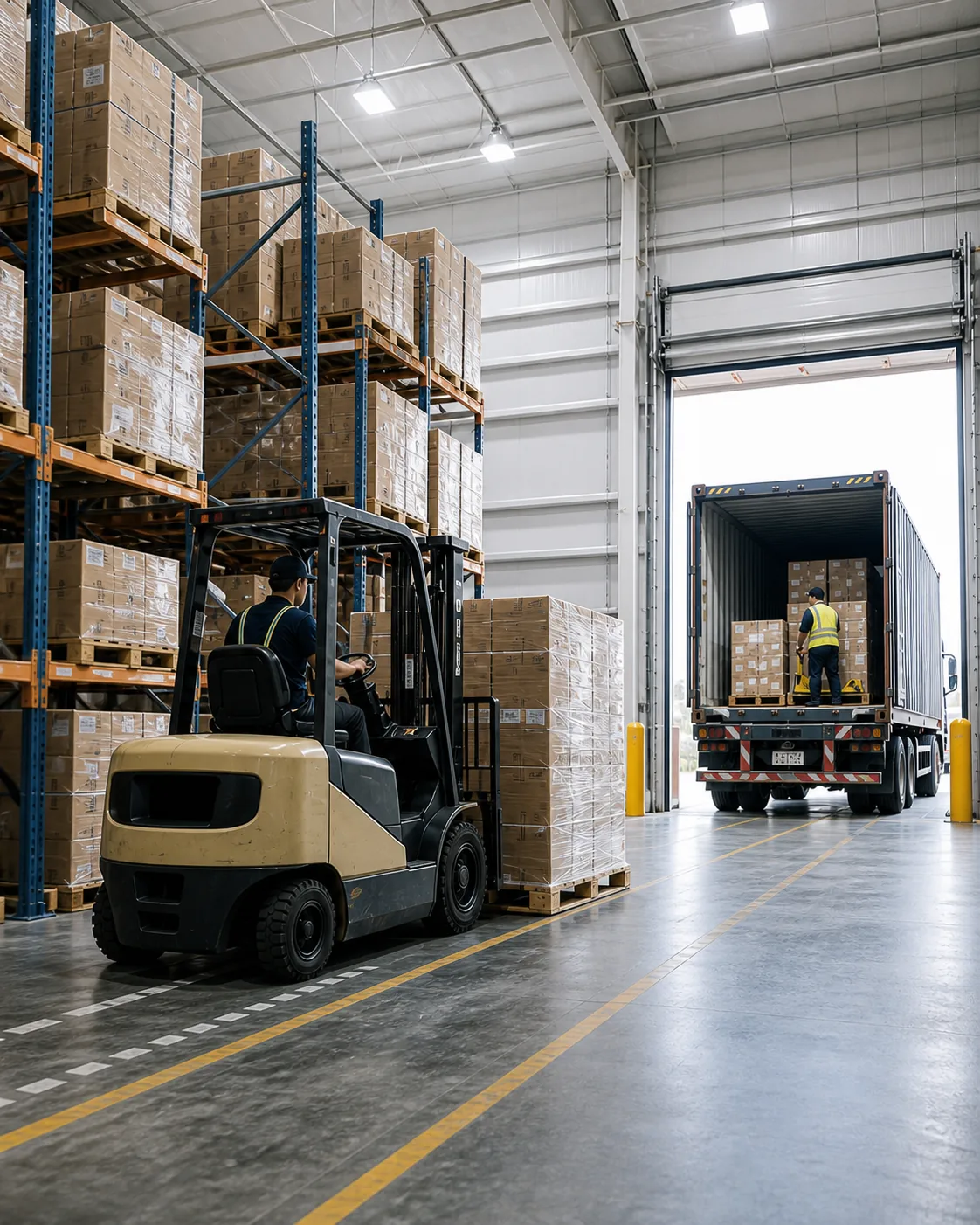
China direct shipping often fits a Shopify brand that needs flexible inventory placement, serves several countries, or is still learning which products sell. A US third-party logistics provider can fit predictable US demand when local stock materially improves the customer promise and the savings cover inbound freight, storage, handling, and inventory exposure. Decide by product and destination using delivered-order economics and tested service performance. Monthly order volume alone is an incomplete decision rule.
This guide compares two operating models. The US warehouse is a hypothetical third-party option; it does not represent a BiaoJu US warehouse or a confirmed partnership. All monetary examples are planning assumptions, not market benchmarks or BiaoJu quotations.
Start with the customer promise and product mix
The first question is what your customer buys besides the product. A shopper replacing an everyday item may place a high value on a short delivery window. Someone buying a customized accessory may accept more time when the promise is explicit. A US location cannot create value merely by existing: the stock must be available, the order must release correctly, and the domestic route must reach the relevant address within the window you communicate.
Direct shipping from China moves the international journey after the customer orders. Local fulfillment moves that journey before the order, through a stock replenishment shipment. Both models contain an international leg. They place its cash commitment, demand uncertainty, and delivery timing at different points in the business.
Build three segments before asking providers for proposals: stable repeat sellers, uncertain or seasonal products, and products whose packaging or compliance makes them operationally difficult. Within each segment, separate US demand from other destinations. A local US inventory pool may be productive for one bestseller while creating stranded stock for a new colorway that sells mostly in Europe.
Do not compare the average of all orders if your range has very different parcel sizes. A lightweight textile accessory and a bulky gift set can produce opposite results. Compare actual baskets, including multiple-item orders, because packaging and pick charges change with basket composition.
| Decision factor | China direct shipping deserves a closer look when… | A US 3PL deserves a closer look when… |
|---|---|---|
| Demand confidence | New variants or uneven sales make destination allocation uncertain | Repeat US sales support a replenishment forecast |
| Delivery promise | Customers accept the tested international service window | Local availability is necessary for the offer |
| Geographic mix | Orders are spread across several destinations | Most demand for the selected products is US based |
| Product economics | Stock flexibility is worth more than possible local transport savings | Local handling and delivery remain economical after inbound costs |
| Returns | A separate destination return arrangement is workable | Inspection and resale near the buyer have measurable value |
| Cash | The brand needs to postpone a destination inventory commitment | The brand can fund stock while it travels and sits unsold |
Compare the complete cost of a delivered order
Use the same basket and boundary
Choose one order profile: product, units, packed dimensions, weight, destination sample, and required delivery scope. Specify whether the comparison includes product acquisition cost. In the example below, both models use the same assumed product cost of $18, which is excluded from the logistics table because it does not change the initial comparison.
For China direct shipping, include receiving, storage allocation, picking, packing, international transport, customs and import charges, final delivery, and expected exception costs. For a US 3PL, include the inventory's journey into the US, receiving, storage, outbound handling, materials, domestic delivery, and expected exceptions. Allocate replenishment charges to the units you reasonably expect to sell, rather than automatically dividing them by every unit shipped into the warehouse.
A quoted parcel price may already include final delivery or import charges. Request an inclusion map before adding either again. For an example of this discipline, use BiaoJu's DDP quote comparison guide. Its purpose is to make different proposals answer the same questions.
Keep customer outcomes separate from warehouse output
An outbound scan proves a handoff event; it does not prove a successful delivery. Track first-attempt delivery, completed delivery, unresolved orders, and paid replacements separately. A model with inexpensive dispatches but frequent recovery work may have a higher cost per completed customer order.
Define an exception reserve using outcomes you can investigate. For example, an assumed 2% replacement rate multiplied by an assumed $30 incremental replacement cost produces a $0.60 reserve per original order. This is an expected expense, not evidence of an actual failure rate. If refunds reduce net revenue in your margin model, do not also include those same refunds as a logistics expense.
Use a consistent denominator. Cost per shipped parcel helps reconcile invoices; cost per customer order helps evaluate split shipments; contribution per retained order helps evaluate the commercial result. Each answers a different question.
Calculate a useful break-even point
Consider a hypothetical one-unit basket sold to US addresses. Prices below use US dollars. Import allocations are assumed cost inputs already reviewed for the hypothetical goods; they are not tariff rates, exemptions, or customs valuation instructions.
| Assumed cost | China direct, per order | US 3PL, per order |
|---|---|---|
| Picking | $1.25 | $2.25 |
| Packaging materials | $0.55 | $0.65 |
| International parcel transport and final delivery | $8.20 | — |
| Direct-order import allocation | $2.10 | — |
| Bulk inbound freight and import allocation | — | $2.35 |
| US receiving allocation | — | $0.35 |
| US domestic delivery | — | $5.40 |
| Incremental exception reserve | $0.60 | $0.30 |
| Variable logistics total | $12.70 | $11.30 |
| Assumed monthly fixed operating allocation | $120 | $850 |
The fixed allocations include the modeled account and storage costs for this specific inventory footprint. Any storage growth, minimum invoice, project work, or additional location changes those assumptions.
For monthly orders N:
China direct logistics per order = $12.70 + $120 / N.
US 3PL logistics per order = $11.30 + $850 / N.
Setting the two totals equal gives N = ($850 − $120) / ($12.70 − $11.30) = $730 / $1.40 = 521.43 orders. Under this simplified model, the US option first becomes cheaper at 522 whole orders a month.
At 300 orders, direct shipping costs $13.10 per order; the US model costs $14.13, rounded to cents. At 900 orders, the figures are $12.83 and $12.24. Those comparisons do not establish a universal migration threshold. They show which assumption to challenge next.
Suppose the US option requires an additional inventory funding and obsolescence reserve of $0.45 per order. Its variable total becomes $11.75. The revised crossing point is $730 / ($12.70 − $11.75) = 768.42, or 769 whole orders. A modest omitted cost changes the recommendation substantially.
Ask each provider which charges change with volume and which stay fixed. If the variable-cost advantage is zero or negative, higher volume cannot offset a larger fixed allocation under this model. If domestic delivery changes sharply with geography, calculate separate destination groups before averaging them.
Measure inventory exposure and replenishment risk
Calculate the stock commitment in units and cash
Local fulfillment ties money to a destination forecast. With assumed sales of 30 units a day and 45 days of stock coverage, the US plan holds 1,350 units. At the assumed $18 product cost, that is $24,300 in product cash before inbound charges. Coverage is an inventory planning assumption, not a recommended universal target.
China fulfillment also requires stock, and it can involve deposits, minimum purchase quantities, storage, and production lead times. The comparison is the incremental commitment created by allocating stock to the US, plus any duplication needed to keep other markets supplied. Moving every unit to one market can reduce stock flexibility even when total units stay unchanged.
Test replenishment against a demand range
Use low, base, and high demand scenarios, then identify the action each would trigger. At low demand, storage and slow stock matter. At high demand, the constraint may be production capacity or replenishment transit rather than domestic fulfillment. A good local service cannot ship stock that has not arrived and been accepted.
Separate production completion, origin pickup, import release, warehouse receipt, and sellable inventory. Replenishment lead time ends when the units are usable in your order system, not when a forwarder reports arrival at a destination port.
Also record the exit cost: removing slow inventory, relabeling, transferring it, or disposing of it through an agreed process. This gives an uncertain product a realistic downside case. A per-order comparison that assumes every inbound unit sells at full price hides that exposure.
Design a hybrid model without uncontrolled splits
A hybrid can keep proven US bestsellers in local stock while shipping slower variants or other destinations from China. The commercial benefit depends on disciplined routing. An attractive bundle may accidentally combine products held in different countries and create two parcels, two delivery timelines, and more support work.
Shopify supports multiple fulfillment locations, but inventory is tracked by location. Its order-routing rules prioritize eligible locations and can seek to minimize split fulfillments. These are platform capabilities, not proof that a particular warehouse connector has been configured correctly. Verify the actual store, app, and workflow against Shopify's locations documentation and order-routing guidance.
Write a routing policy that answers five questions: which destination each location serves, which products are eligible, what happens during stockouts, whether mixed-location baskets are permitted, and who may override the rule. A fallback must not silently break the delivery promise made at checkout.
Test a single bestseller, a mixed basket, a partial stockout, an address outside the primary delivery area, and a cancellation after order release. Confirm both physical handling and storefront notifications. BiaoJu's Shopify fulfillment service page outlines the operating questions to agree before live orders; connection method and automated updates require technical confirmation.
Returns also need an independent rule. Sending a replacement from China does not mean a returned unit can be received, inspected, and resold in the US. Establish a return destination, condition grading, inventory update, and disposition approval before describing local returns to customers.
Run a pilot that can challenge your assumptions
Use matched order profiles rather than comparing a quiet direct-shipping week with a promotional local-fulfillment week. Keep product, packaging specification, destination mix, and customer promise as comparable as practical. Record the differences that remain; an uncontrolled pilot is useful operational evidence but weak evidence of savings.
For an initial operational pilot, select ordinary addresses and known edge cases, then allow every parcel to reach a resolved outcome. A small pilot can expose handoff failures. It cannot precisely establish rare failure rates or annual peak performance, so continue reviewing actual results as volume increases.
Capture order payment, release, warehouse acceptance, carrier acceptance, delivery, and resolution timestamps. Report median and a slower percentile for completed orders, with unresolved orders shown separately. Otherwise a fast average can hide the orders that have not finished.
Review financial evidence after invoices arrive. Reconcile billed weight, surcharges, receiving work, materials, inventory discrepancies, and exception charges. Distinguish a provider error, an input error, and a charge allowed by the proposal. Each calls for a different corrective action.
For US-facing sales, the FTC's merchandise-order rule requires a reasonable basis for advertised shipment timing and addresses delayed-shipment consent and refunds. Shipment timing and delivery timing are different measures. Use FTC guidance to review the customer promise rather than copying a carrier estimate directly into an advertisement.
Choose your pilot gates before seeing results: maximum acceptable cost per order, acceptable delivery distribution, required tracking coverage, inventory reconciliation, and no unresolved failure in an essential cancellation or address workflow. These are business-specific acceptance criteria. A cheaper model should earn a larger rollout only after its necessary operating controls work.
Use the decision worksheet
Complete one worksheet per product segment and destination, with a named owner and review date.
| Worksheet field | What to enter |
|---|---|
| Customer promise | Dispatch and delivery wording, starting event, destination coverage |
| Demand | Low/base/high monthly orders; units per basket; confidence level |
| Packaging | Actual packed dimensions, weight, materials, approved variants |
| Cost scope | Product cost boundary; fixed and variable logistics; exception treatment |
| Inventory | Coverage, replenishment milestones, incremental cash, slow-stock exit |
| Routing | Eligible products/locations; mixed basket and stockout behavior |
| Evidence | Dated quotes, pilot results, invoices, stock reconciliation |
| Decision trigger | What result justifies scaling, pausing, or changing the model |
Finish with a conditional decision, such as: “Keep this segment on China direct shipping until repeat US demand supports the revised break-even point and the local-stock pilot meets the customer promise.” That is more actionable than choosing a warehouse model for the entire brand permanently.
Frequently asked questions
Is a US 3PL always cheaper once a Shopify brand grows?
No. Higher volume can spread fixed costs, but inbound freight, stock exposure, receiving, packaging, geography, and returns still matter. Growth in products or destinations can increase complexity. Compare the actual order mix and written proposals; a volume milestone by itself proves little.
Does shipping from China mean importing goods for every customer order?
The physical and customs arrangement depends on the selected route. Ask how parcels enter the destination, who supplies the declaration data, and how import charges are handled. Do not infer a duty exemption or importer structure from a low-value order or a DDP label.
Can I use China fulfillment and a US 3PL in one Shopify store?
Shopify supports multiple locations, but the store needs appropriate inventory, shipping, and routing configuration. Warehouse integrations and tracking behavior need separate verification. Test stockouts and mixed-location baskets before enabling a hybrid model for live customer orders.
How should I choose products for local stock?
Start with products whose repeated US demand, delivery requirement, and fully allocated economics justify the commitment. Consider variant-level evidence, not just product-family revenue. Include replenishment reliability and the cost of unsold units in the decision.
Build the proposal around your own order mix
Bring the product segment, destination mix, packing specification, monthly demand range, and customer promise to the comparison. BiaoJu can review the China-origin side of that plan and identify route assumptions and open questions. Chat on WhatsApp, and use the pricing guide to prepare a complete cost boundary.
Sources and further reading.
Published Oct 15, 2026. Source references reviewed Oct 15, 2026. Confirm current terms for the actual shipment.
Keep the shipment in context.
Shipping costs
How to Calculate Landed Cost for Ecommerce Orders Shipped from China
Calculate landed cost for orders shipped from China with a complete cost formula, worked basket example, exception reserve, and invoice reconciliation.
· 12 min read

Shipping costs
Dimensional Weight Explained: How Packaging Changes Your Shipping Cost
Understand dimensional weight with named carrier rules, verified formulas, packaging examples, rounding effects, and a practical shipping-cost worksheet.
· 10 min read

Delivery & tracking
Shipping from China to the USA: How to Set Realistic Delivery Promises
Set realistic China-to-USA delivery estimates with shipment clocks, P50 and P80, unfinished parcels, business-day calendars and customer update templates.
· 10 min read
Turn the checklist into a conversation.
Message BiaoJu with your destination and shipping question. We will identify the information needed for a shipment-specific review.
Chat on WhatsApp