Shipping costs
How to Calculate Landed Cost for Ecommerce Orders Shipped from China
Calculate landed cost for orders shipped from China with a complete cost formula, worked basket example, exception reserve, and invoice reconciliation.
By BiaoJu Editorial Team · · 12 minute read
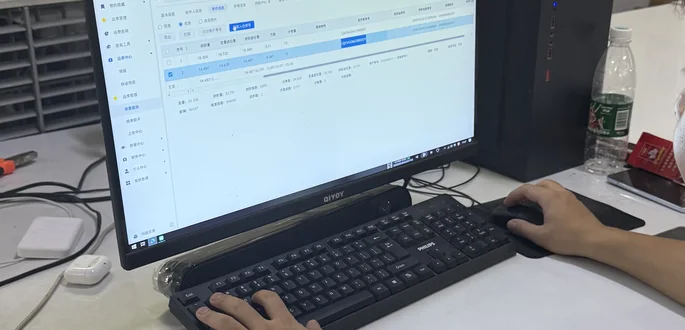
Calculate landed cost by adding product acquisition, origin handling, packaging, transport, clearance, duties, nonrecoverable import taxes, and delivery costs to one clearly defined endpoint. Then add a separate allowance for incremental exceptions when planning order contribution. For ecommerce parcels shipped from China, the useful endpoint is usually the customer delivery address. A low transport quote is insufficient if its import or final-delivery scope is unclear.
The method below is a management planning framework, not a customs valuation or tax calculation method. Every number in the worked example is an explicit assumption. Actual duties, valuation, tax treatment, and importer arrangements require review for the product, transaction, destination, and current rules.
Define the endpoint and the accounting boundary
Distinguish inventory cost from delivered-order cost
“Landed” needs a named place. A buyer importing stock into a warehouse may mean the cost of getting sellable inventory into that facility. A DTC brand shipping from China directly to a shopper may mean the cost of acquiring the goods and fulfilling the customer order through final delivery. Those totals cannot be compared until their endpoints match.
For this guide, base delivered-order cost includes product acquisition and the planned logistics expenses necessary to complete the specified delivery. The expected order-cost total adds incremental exceptions, such as a replacement shipment, using a separate reserve. Payment fees, advertising, and company overhead remain outside that cost until the contribution calculation.
Tax treatment is another boundary. A payment that is recoverable under an applicable tax arrangement can still create a cash requirement without necessarily being a permanent economic cost. Recovery eligibility, records, and timing need qualified confirmation. Maintain cash-outlay and economic-cost views where relevant instead of silently removing every tax payment from the spreadsheet.
Separate money collected from expenses incurred
A shipping fee paid by the customer is revenue for the order model, not a reduction in the carrier's cost. Likewise, money collected for tax is not automatically available contribution. Define net merchandise revenue, shipping revenue, discounts, tax amounts, and refunds consistently before evaluating margin.
Use one order identifier to connect the store record, parcel record, quote, invoice, and any recovery event. When one customer order creates two parcels, sum their actual costs at the order level. Otherwise the apparent cost of each parcel can look acceptable while the basket loses money.
Build an input record for the actual order
Start with commercial and physical facts before entering a freight rate. For each product, record its name, materials, intended use, manufacturing origin, acquisition price, currency, and available classification evidence. Record battery, liquid, magnet, or other regulated characteristics rather than waiting for an exception to reveal them.
For each basket, record units, product mix, packed gross weight, external package dimensions, packing materials, and whether the order becomes multiple pieces. Use the finished parcel, not a supplier's product-only dimensions. A retail display box inside an outer carton can alter the transport basis significantly.
For the destination, record country, postcode or representative address group, delivery type, and the required service window. A country average may hide remote-area or address-specific charges. If you are estimating a whole market, use weighted destination groups from your expected order mix and show which groups lack a confirmed quote.
Shopify's duties and import-tax guidance explains the importance of product HS codes and country of origin, and cautions that checkout amounts are estimates. Your operating record should preserve the inputs used at checkout and those used in the actual shipment review. Correcting a spreadsheet cannot repair inconsistent declaration data already sent downstream.
Give every uncertain input a status: confirmed by a dated proposal, estimated internally, or awaiting review. “Unknown” is useful information. Converting an unresolved importer or duty arrangement into a zero creates false precision and may encourage a product launch that the current route cannot support.
Convert a quote into a cost map
Use inclusion flags to prevent double counting
Create a row for each necessary activity, even when the provider bundles several rows into one charge. Mark the activity as included in bundle A, separately priced, paid by another party, or unresolved. Sum each monetary charge once. Keep the component rows as scope evidence rather than adding them as additional expenses.
For example, a hypothetical $14.95 parcel bundle might contain transport, clearance, import charges, and final delivery. You should not add an independent delivery estimate if the bundle already includes the agreed address scope. However, a remote-area exception may still be outside the bundle. The question is what work the proposal includes, not whether its heading says “all-in.”
DDP concerns the seller's delivery and import responsibilities under the sale arrangement. It does not establish the detailed fee schedule between the seller and a logistics provider. ICC Academy's DAP/DDP explanation provides responsibility context; BiaoJu's DDP quote comparison guide helps turn that context into questions for a shipment proposal.
Preserve the quote's units and validity
Record whether a charge applies per parcel, per kilogram, per order, per unit, per carton, or per month. Include currency, effective date, expiry date, minimum charge, and conditions for reweighing or repacking. A per-unit picking charge multiplied by the number of orders produces the wrong answer when baskets contain multiple units.
Dimension-based pricing also needs the named service's divisor and rounding rules. DHL Express's UK weight and dimensions guidance describes a centimetre-based calculation using 5,000 and comparison with actual weight. That documented example does not establish a divisor for a BiaoJu route. Enter the rule in the actual proposal instead of borrowing one from a familiar carrier.
Work through a complete two-item example
Assume a brand sells two identical accessories in one parcel to a reviewed destination. All amounts are US dollars. There is no recoverable import-tax amount in this example. The duty and import-tax allocations below are hypothetical agreed cost inputs; they are not computed from a universal percentage, a legal threshold, or the product acquisition price.
| Cost input | Calculation or assumption | Amount per order |
|---|---|---|
| Product acquisition | 2 units × $11.50 | $23.00 |
| Origin pickup allocation | Share of a consolidated pickup | $0.40 |
| Order processing and picking | Assumed work for this two-unit basket | $1.20 |
| Packaging materials | Assumed approved pack | $0.60 |
| International transport | Hypothetical quoted component | $6.90 |
| Clearance service | Hypothetical quoted component | $0.75 |
| Import duties | Hypothetical reviewed allocation | $4.10 |
| Nonrecoverable import taxes | Hypothetical reviewed allocation | $0.90 |
| Other handling allocation | Work outside the transport bundle | $0.25 |
| Final delivery | Hypothetical quoted component | $2.30 |
| Base delivered-order cost | Sum of the preceding rows | $40.40 |
The base calculation is:
$23.00 + $0.40 + $1.20 + $0.60 + $6.90 + $0.75 + $4.10 + $0.90 + $0.25 + $2.30 = $40.40.
If the provider quotes a $14.95 transport/import/delivery bundle, reconcile it as $6.90 + $0.75 + $4.10 + $0.90 + $2.30 = $14.95. The remaining logistics work totals $0.40 + $1.20 + $0.60 + $0.25 = $2.45. The alternative sum is therefore $23.00 + $14.95 + $2.45 = $40.40. Both methods give the same answer because the bundle is counted once.
Add incremental exceptions carefully
Assume 2% of original orders require a replacement and that each replacement creates $36 of additional product, handling, and transport expense after any recoveries. The expected replacement reserve is 0.02 × $36 = $0.72 per original order. Expected order cost becomes $40.40 + $0.72 = $41.12.
The original product and shipment remain in the base cost. The $36 represents only the additional replacement expense. This example assumes replacement outcomes, with no revenue refunds. If you instead model a refund, reduce net revenue as appropriate and include only separate incremental costs; adding the refunded revenue again as an expense would count its effect twice.
Connect the result to contribution
Assume merchandise revenue after discounts is $72, shipping revenue is $6, payment fees are $2.64, and customer acquisition cost is $18. These are illustrative commercial inputs, not quoted platform charges.
Order contribution = $72 + $6 − $41.12 − $2.64 − $18 = $16.24.
Contribution margin on $78 of net order revenue = $16.24 / $78 × 100 = 20.82%, rounded.
This is contribution before company overhead and other costs outside the stated boundary. It is not net profit. A free-shipping promotion with unchanged product revenue would reduce contribution by $6 to $10.24, unless the offer also changes basket value, conversion, or other costs. Evaluate those changes with actual evidence before attributing a gain to the promotion.
Test the variables that can change the decision
Do not present a single precise cost as the entire forecast. Build a sensitivity table around uncertain, material inputs and identify the commercial action associated with each outcome.
| Independent scenario | Change from the example | Expected order cost | Contribution, other inputs unchanged |
|---|---|---|---|
| Base | None | $41.12 | $16.24 |
| Higher transport | Add $1.50 per order | $42.62 | $14.74 |
| Import allocation revision | Add $2.00 per order | $43.12 | $14.24 |
| More replacements | 4% × $36 instead of 2% × $36 | $41.84 | $15.52 |
| Packaging and transport change | Add $0.30 materials; reduce transport $1.10 | $40.32 | $17.04 |
Each scenario changes one assumption independently; the improvements are not measured results. If higher transport and a revised import allocation happen together, add both changes rather than selecting whichever row looks more favorable.
Use a downside case before committing to a price or campaign. Ask whether the contribution remains acceptable if the quote expires, packing changes, or an uncertain charge becomes payable. A route comparison should use the same service objective: a cheaper, slower route may be useful, but it is a different offer if the storefront promise stays unchanged.
For orders billed in several currencies, store the original amount and the conversion basis used for planning. Update the management view when exchange rates or payment costs move, while retaining the original invoice amount for reconciliation. Avoid disguising currency variance as carrier performance.
Allocate shared costs without hiding weak products
Shared charges need an allocation rule that matches the cause of the expense. Allocate picking by handling work or units when that reflects the quote. Allocate storage by the provider's actual storage basis. Allocate transport using the agreed parcel or shipment billing method. Product value alone may be a poor transport allocator for a low-price item that occupies most of the box.
For a bundle, calculate both order contribution and the effect of adding the extra item. If a second unit raises revenue by $20 and creates $12 in incremental acquisition and delivery cost, the bundle adds $8 before other incremental fees. That is different from splitting the existing parcel cost equally and declaring every item equally profitable.
Receiving and setup costs also need a sensible time horizon. A one-time $300 setup spread over 100 test orders adds $3 each; spread over 1,000 orders, it adds $0.30. Neither horizon is automatically correct. Use the volume justified by the decision being made and show the setup separately so the reader can evaluate another horizon.
An average destination cost can be useful for pricing, but retain the group-level detail. A profitable US average can subsidize an unprofitable remote segment without anyone noticing. Decide explicitly whether to absorb, price, limit, or separately review that segment instead of letting an average make the policy by default.
Reconcile estimates with actual invoices
Create a variance record once final charges become available. For each difference, capture the original input, quoted rule, actual event, evidence, amount, and owner. Useful categories include packaging measurement, product or customs-data correction, destination exception, scope misunderstanding, currency movement, and provider billing error.
Reconcile the parcel first, then the order. A second tracking number may explain why a basket cost more. A revised package measurement may explain a transport adjustment. An unexplained charge needs the underlying rate or work authorization, rather than a new average added silently to next month's forecast.
Feed resolved variances back into product data, packaging instructions, customer address collection, and proposal assumptions. Costs become more predictable when the inputs improve. A spreadsheet that only records the final amount misses the chance to prevent the same exception.
Use current official tools when checking import assumptions. The European Commission's Access2Markets overview describes product- and market-based information on tariffs, taxes, procedures, and product requirements. Treat such information as input to a destination review; it does not automatically confirm the operating arrangement or tax recovery status of your particular seller.
Use the landed-cost worksheet
Maintain one row per order profile, with underlying component rows for included bundles.
| Worksheet field | Required record |
|---|---|
| Scope | Destination endpoint; goods included; cash or economic cost view |
| Basket | SKUs, quantities, acquisition cost, materials, origin evidence |
| Parcel | Finished dimensions, gross weight, number of pieces, packing version |
| Quote | Provider, named route, currency, validity, units, inclusion flags |
| Import | Reviewed duty/tax allocation, importer arrangement, unresolved inputs |
| Exceptions | Outcome definition, assumed probability, incremental cost, recovery |
| Revenue | Merchandise and shipping revenue after discounts and refund policy |
| Validation | Invoice comparison, variance reason, owner, next review date |
Assign ownership between the commercial, fulfillment, and finance teams. Product changes should trigger a packing and import-input review. Route or pricing changes should trigger a quote review. The worksheet becomes useful when those updates happen before customer orders are released, rather than after a margin report reveals the problem.
Frequently asked questions
Is landed cost the same as shipping cost?
No. Shipping cost is one part of the total. A landed or delivered-order calculation can also include acquisition, handling, clearance, duties, and nonrecoverable taxes. State the destination endpoint and included categories so another person can reproduce the result.
Does a DDP quote eliminate the need for a landed-cost calculation?
No. You still need product acquisition, any separately priced warehouse work, the quote's actual scope, and incremental exception costs. The DDP delivery responsibility does not replace the provider's written cost and operating proposal.
Should recoverable import tax be included?
Keep it in the cash-outlay view when you must pay it. Its treatment in an economic-cost or accounting view depends on confirmed recovery eligibility and supporting records. Do not assume recovery merely because the business has a tax registration.
How should I estimate costs before final packaging is available?
Use clearly labeled package scenarios and provisional quotes. Record a range rather than treating the smallest guessed carton as final. Confirm the finished pack, product details, destination, and route scope before using the estimate for a binding commercial decision.
Turn the worksheet into a comparable proposal
Send the order profile and marked uncertainties with your inquiry. BiaoJu's pricing page explains the shipment inputs that shape a proposal; its Shopify fulfillment guide covers the warehouse workflow behind the cost. Chat on WhatsApp to replace planning assumptions with a dated scope for eligible goods.
Sources and further reading.
Published Oct 15, 2026. Source references reviewed Oct 15, 2026. Confirm current terms for the actual shipment.
Keep the shipment in context.
Fulfillment strategy
China Direct Shipping vs. a US 3PL: Which Model Fits Your Shopify Brand?
Compare China direct shipping and a US 3PL with a Shopify cost model, inventory exposure, routing checks, and a practical pilot before committing stock.
· 12 min read

Shipping costs
Dimensional Weight Explained: How Packaging Changes Your Shipping Cost
Understand dimensional weight with named carrier rules, verified formulas, packaging examples, rounding effects, and a practical shipping-cost worksheet.
· 10 min read

Delivery & tracking
Shipping from China to the USA: How to Set Realistic Delivery Promises
Set realistic China-to-USA delivery estimates with shipment clocks, P50 and P80, unfinished parcels, business-day calendars and customer update templates.
· 10 min read
Turn the checklist into a conversation.
Message BiaoJu with your destination and shipping question. We will identify the information needed for a shipment-specific review.
Chat on WhatsApp