Returns
Cross-Border Ecommerce Returns: Local Return, Refund or Ship Back to China?
Compare local returns, replacements, refunds and shipping back to China using customer rights, recovery value and a practical Shopify returns workflow.
By BiaoJu Editorial Team · · 11 minute read
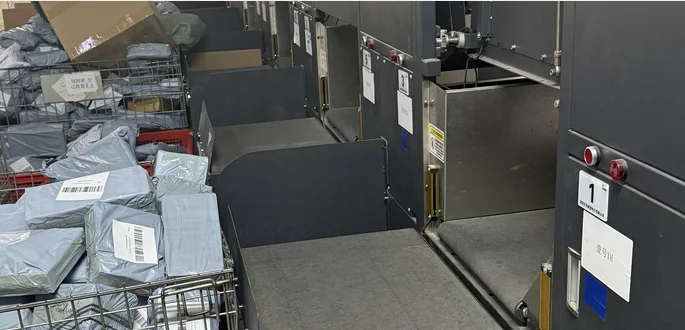
A cross-border return should follow two decisions in order: establish the remedy the customer is entitled to, then choose an eligible recovery method. Returning every item to China can cost more than the recoverable stock is worth. Refunding every claim without investigation can hide defects and preventable mistakes. A practical returns system combines customer rights, product condition, recovery economics and an evidence trail.
For a Shopify brand shipping China-based inventory to the United States, EU or UK, the cheapest physical route is only one part of the answer. The process must also tell the customer what happens next, prevent duplicate refunds, and keep returned stock out of sellable inventory until it has been inspected.
Separate customer remedies from stock recovery
Start by recording why the customer is contacting you. A change of mind, an incorrect item, an alleged defect and a parcel that never arrived are different cases. They may require different evidence and remedies. A delivery investigation should not be recorded as a returned product when no product has come back.
The EU's official distance-selling guidance describes a withdrawal period generally running for 14 days after delivery, with exceptions. It also explains advance information about return costs and reimbursement of standard outbound delivery. These withdrawal rules are distinct from remedies for faulty goods. The Your Europe returns FAQ notes that remedies for defective products covered by the legal guarantee must include shipping without cost to the consumer.
For UK sales, GOV.UK's returns guidance distinguishes distance-sale cancellation from faulty-goods rights, describes notification and return periods, and lists exceptions. A commercial policy cannot remove statutory rights. Have the applicable market, product and circumstances checked before deciding who pays or whether a deduction is permitted.
Do not transplant one country's policy into every checkout. This article does not establish a universal US cooling-off period or a complete legal policy for every EU member state. Write market-specific terms with qualified review, and use the economic framework below to choose between options that are actually permitted.
That separation matters when an item has almost no resale value. You can decide that recovering the item is uneconomic while still providing the required customer remedy. Equally, a valuable item does not justify imposing a return process that conflicts with the customer's rights.
Compare four recovery options
Use this matrix after confirming the remedy and product eligibility. The descriptions are planning options, not claims that a particular logistics provider offers them.
| Option | Useful starting condition | Costs to include | Operational check |
|---|---|---|---|
| Refund without physical return | Recovery value is low or the item is unsafe to resell | Required refund, support, fraud review, disposal guidance | Verify identity and evidence proportionately; never request unsafe disposal |
| Replacement or exchange | The customer wants a usable product and the remedy allows it | Replacement stock, handling, transport, import costs, any required return | Keep the original claim and replacement order linked |
| Local return and inspection | Recoverable value is meaningful and an eligible local partner exists | Label, receiving, inspection, storage, restocking and fixed fees | Confirm item acceptance, grading rules and inventory destination |
| Return to China | Repair, supplier investigation or recovery value justifies the route | International freight, export/import handling, receiving and repair | Obtain route and customs instructions before issuing the label |
Local receipt does not automatically make an item suitable for local resale. The warehouse needs permission, product information, compatible inventory records and an approved disposition. A cosmetics product with a broken seal and an unopened accessory should not share the same default grading rule.
A replacement is also a new outbound shipment. Check product eligibility, address and import arrangements again rather than copying an old shipping record without review. A customer who has moved, or a replacement containing a different battery configuration, may need a different assessment.
Calculate the value of recovering an item
Compare incremental recovery costs separately from the customer remedy. If the same refund is legally owed under each option, it cancels out of the recovery comparison. Keep it in the finance record, but do not add it to one route and omit it from another.
A simple planning formula is:
Expected net recovery = probability of a saleable recovery × net recovery proceeds − incremental recovery costs.
Net recovery proceeds should be after any future selling costs that your model requires. Incremental recovery costs include the return label, handling, inspection and any allocated fixed fee. If repairs have several outcomes, model them separately rather than assuming every return becomes new stock.
Consider this hypothetical example. These amounts are invented assumptions for comparison, not BiaoJu prices, customer results or a suggested refund policy. Assume the customer remedy is identical across the three recovery choices, and a saleable recovered unit would produce $24 in net recovery proceeds.
| Recovery choice | Saleable recovery probability | Incremental costs | Expected net recovery |
|---|---|---|---|
| No physical recovery | 0% | $0 | $0 |
| Local receipt and grading | 70% | $6 label + $4 handling + $2 fixed-fee allocation | 0.70 × $24 − $12 = $4.80 |
| Return to China | 80% | $18 freight + $5 handling | 0.80 × $24 − $23 = −$3.80 |
Under these assumptions, local recovery adds $4.80 compared with no recovery. Returning to China loses $3.80 before considering extra delays or unpriced customs work. The comparison changes if a supplier repair creates more value, local recovery is unavailable, or an inspection is required to investigate a safety problem.
Run one sensitivity check before setting a rule. With $12 local recovery cost, the break-even saleable probability is $12 ÷ $24 = 50%. If your actual grading data puts the probability below 50%, the local route no longer creates positive recovery value on this simplified basis. Do not use a whole-store average if one SKU is much harder to resell.
Decide when local consolidation makes sense
A local returns address can reduce individual international journeys, but a fixed monthly charge can overwhelm a small volume. Compare a monthly model with a pay-per-return alternative using the same scope.
In a second hypothetical example, a local partner charges a $150 monthly fee plus $8 per return for the same receiving and inspection work that costs $15 per return elsewhere. The monthly model becomes cheaper when:
$150 + $8n < $15n, so n > 21.43 returns.
At 22 returns, the monthly option costs $326 versus $330. At 10 returns it costs $230 versus $150. These are arithmetic examples; they exclude any services not shared between the alternatives. Storage, consolidation freight and disposal charges must be added if applicable.
Volume alone does not settle the decision. Ask whether the partner can segregate stock by brand, record condition with consistent photographs, provide a searchable return ID, and return a disposition file. Agree what happens to items that sit unresolved. A convenient address without inspection evidence may simply move the uncertainty to another warehouse.
If returns will be consolidated back to China, clarify who prepares the shipment records, which goods are eligible, and how customs declarations will be handled. Do not describe goods as samples or reduce their value merely because they are returns. Any duty recovery or relief requires its own eligibility and documentation assessment; do not book a tax refund as certain income.
Build a returns workflow in Shopify
Shopify's returns documentation distinguishes a return, a refund and an exchange. Use that separation in your operating records. A return request can exist before the item is received, and receiving stock does not itself prove that the required refund has been issued.
Create one case ID and link it to the original order, SKU, quantity and fulfillment record. Record the reason using a controlled list, then add narrative detail. Useful reason codes include change of mind, size or fit, wrong SKU, visible damage, alleged defect and non-delivery. Allow several reasons where necessary instead of forcing every complaint into one bucket.
Assign an owner for each handoff: customer support confirms the requested remedy; an authorized reviewer checks eligibility; logistics issues instructions; the receiving partner records condition; finance handles payment; inventory staff approve disposition. In a small team one person may hold several roles, but the record should still show which step was completed.
| Case field | What to record |
|---|---|
| Customer remedy | Requested and approved action, applicable policy review and deadline |
| Physical movement | Return route, label or tracking number, receiving location |
| Condition evidence | Quantity received, photos, seal status, serial number where relevant |
| Financial action | Refund or exchange reference, amount, date and approving person |
| Inventory disposition | Quarantine, repair, resale, supplier investigation or authorized disposal |
Use the platform functions available to your store and partner; automatic synchronization depends on the actual integration. Do not assume a China fulfillment provider receives every return update. Test a complete case, including a partial return from a multi-item order, before relying on the workflow.
Handle exceptions and communicate clearly
Three exceptions deserve written instructions before launch. First, an item may arrive without a recognizable return authorization. Put it in an exception location, record evidence and assign a search task rather than immediately adding it to inventory. Second, a customer may send back the wrong quantity or a different serial number. Preserve the record and resolve the discrepancy fairly before closing the case.
Third, a battery, leaking liquid or suspected unsafe product may require a specialized route. Do not issue a standard label until the transport restrictions are checked. Customer service should offer the appropriate next step without instructing the customer to mail hazardous material through an unsuitable service.
A useful customer message explains the approved action, exact instructions and the next update. For example, the following is a reusable template whose bracketed fields must be completed for the actual case:
We have recorded your request for order [order number]. The approved next step is [return, replacement or refund action]. Please follow [instructions or label link] and retain [required receipt or evidence]. We will update you by [specific date] about [receipt, inspection or payment]. Contact us using case [case ID] if the parcel cannot be accepted by the carrier.
Avoid making the customer chase several parties. The brand should own the customer conversation even when the warehouse or carrier supplies the evidence. A scheduled update is useful when an investigation is continuing; an invented resolution time is not.
Review the measures that reveal the real problem
Measure returns by a defined order cohort, with a consistent observation window. A new month's orders have had less time to be returned than orders placed several months earlier. Separate requested returns, received returns and completed refunds so the dashboard does not confuse customer intent with physical movement.
Track cost per resolved case, recovery proceeds, time to customer remedy and the share of cases reopened. Record the denominator for each measure. A high recovery rate is not helpful if the process delays a required refund or repeatedly sends unusable stock back into inventory.
Review reasons by SKU, packaging version, supplier batch and fulfillment location. A cluster of wrong-color returns may point to barcode or pick-location errors. Damage concentrated in one pack design may justify a packaging review. A product-fit issue may require clearer dimensions or product photography. Those are investigation hypotheses; confirm them before attributing blame or claiming an improvement.
Frequently asked questions
Should every cross-border return go back to China?
No universal rule fits every item. Establish the customer remedy first, then compare permitted recovery routes using recoverable value, transport eligibility, evidence needs and complete incremental costs.
Is a local returns warehouse the same as a local fulfillment warehouse?
It can be, but the agreement must cover receiving, grading, storage, inventory records and disposition. An address alone does not establish a resale or fulfillment capability.
Can a refund be issued without receiving the item?
That can be a commercial resolution in an appropriate case, subject to applicable rights and policy. Record the authorization and financial action, and decide separately whether physical recovery is useful or required.
Does DDP outbound shipping include return freight?
Check the written logistics scope. Do not infer that an outbound delivery arrangement also includes reverse shipping, inspection, replacement dispatch or duty recovery.
What should a first returns plan contain?
Market-specific policy review, reason codes, named handoff owners, route eligibility, cost assumptions, customer templates, inventory disposition rules and one tested case for each important exception.
Put the return plan beside the outbound plan
A fulfillment decision is incomplete if nobody knows what happens after a wrong item, failed delivery or change-of-mind request. Use the China fulfillment for Shopify guide and the DDP quote comparison checklist to identify which reverse-logistics questions need a separate written scope.
Chat on WhatsApp with your product, destination, expected volume and current return problem. Ask which handling options can be supported for the actual route, and confirm the responsibilities before booking.
Sources and further reading.
Published Oct 15, 2026. Source references reviewed Oct 15, 2026. Confirm current terms for the actual shipment.
Keep the shipment in context.
Fulfillment strategy
China Direct Shipping vs. a US 3PL: Which Model Fits Your Shopify Brand?
Compare China direct shipping and a US 3PL with a Shopify cost model, inventory exposure, routing checks, and a practical pilot before committing stock.
· 12 min read
Shipping costs
How to Calculate Landed Cost for Ecommerce Orders Shipped from China
Calculate landed cost for orders shipped from China with a complete cost formula, worked basket example, exception reserve, and invoice reconciliation.
· 12 min read
Fulfillment strategy
A Shopify Fulfillment Workflow for China-Based Inventory
Build a Shopify fulfillment workflow for China inventory with SKU mapping, location checks, order release, split orders, cancellations and a test checklist.
· 10 min read
Turn the checklist into a conversation.
Message BiaoJu with your destination and shipping question. We will identify the information needed for a shipment-specific review.
Chat on WhatsApp